Team members were deeply disturbed by the idea of meekness. That day, as we’d served in Kenya together, we’d studied, “blessed are those who mourn.” But at dinner, team members brought up the beatitude we would study the next day, already distressed by it.
People proposed various definitions of “meek,” from being a doormat to setting power aside for a greater purpose. We agreed that Americans’ values of independence, self-determination and standing up for our rights inhibit our ability to grasp the concept of meekness.
Finally, we left the discussion hanging. “Let’s see what tomorrow brings,” I concluded.
According to dictionary.com, meekness means: “enduring injury with patience and without resentment.”
There was a time I endured “injury with patience and without resentment.” Up to a certain point. Until I didn’t.
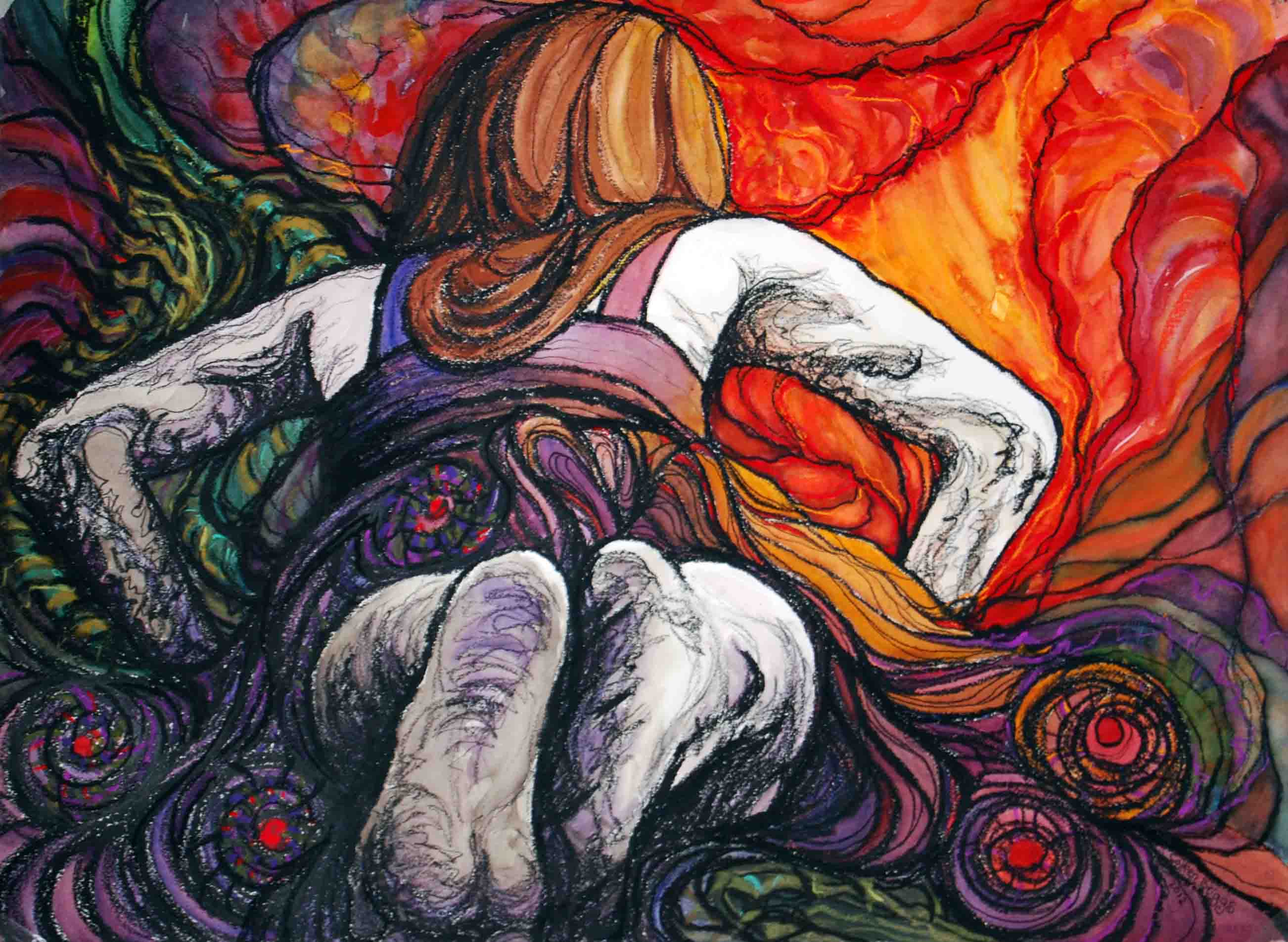
The breaking point: a phone call that literally shattered me into the red soil of Nairobi. Puffs of dust rising around me, with my head between my knees, I wept inconsolably.
After five grueling months of battling enemies within and without to adopt our daughter from a Kenyan orphanage, our lawyer was calling to tell me that he and an orphanage representative had been unable to find each other at a court hearing. And so, the first of three court dates of our third legal process had been postponed for two more weeks. It seemed I was no closer to bringing our fourth child home than the day I’d set foot in Kenya five months prior.
Our first legal process had ground to a shocking halt when I arrived in Kenya with our two youngest sons, age four, while my husband and oldest son, age seven, remained in the US for work and school. On my second day in country, I discovered that our first lawyer had disappeared with all our money and that of twenty other adoptive parents. Simultaneously, I heard rumors that courts were no longer granting guardianship to foreigners, the legal process we were relying on to reunite our family within 6-8 weeks. Several American families had completed adoptions during the previous year through this legal provision; but unbeknownst to us, Kenya’s adoption laws were in rapid re-interpretation even as I stepped off the airplane.
The orphanage had already placed our daughter in my care, and so we hired a second lawyer to help us apply for guardianship. We believed God had called us to adopt this little girl.
Certainly, God provided manna in the desert. My kids and I savored high-season mangoes and avocadoes, fresh from the tree. We enjoyed outings to a shop in the nearby town to sip sodas. I practiced Swahili with friendly locals. Immersed in Kenyan society, even as a steady stream of American family members traveled to Kenya to keep us company, there were days when my biological four-year-old son and I were the only white people for miles. Impoverished friends invited us into their homes and honored us with special feasts. I savored the experiential insight into my adopted children’s birth country that can only be earned by living there. I delved deeper into daily dependence on God than ever before in my life.
We often lingered over evening chai with dear friends, the Karaus, who became like family to us. Pastor Karau and I visited a man dying of AIDS and prayed with him to receive Christ, and we were able to locate an orphanage for his young nephew.
At first, I found purpose in our delay.
I chose to endure the challenges and unexpected barriers we encountered, trusting that God had called us to adopt this child and He was at work in ways I could not see.
But, at the two-month mark, the longest we’d expected to be separated, our family reunited to attend a court date in our second case. And my husband and son returned home without a verdict, without us. Two weeks later, with the news that guardianship had been denied, I had no idea when I would see them again. The cost of maintaining households in two countries as well as multiple legal processes had sucked our savings dry and left us tapping a home-equity loan. Due to details of our daughter’s case, in addition to Kenya’s changing adoption laws, the possibility tormented me that even if I did return home, I would leave without this child we so longed to claim.
No more patience remained, and anxiety and resentment overwhelmed me.
We hired a third lawyer to pursue full adoption, and he cared for our hearts and went above and beyond for our case. But his phone call about the missed court date became the proverbial straw that broke the camel’s back. My soul stepped off a precipice, utterly free-falling at last. “That’s it,” I told him. “I’m done. I’m going home.”
On that day, my youngest children and I had been living for five months in the compound of a Christian organization that had taken pity on us, allowing us to rent space in their student hostel. I felt guilty for staying much longer than expected, and yet I had no idea where else to go. When the organization needed the space and could no longer host us, a new friend negotiated for us to stay in the home of a missionary on furlough. Soon after I hung up from the call, a friend arrived to help us relocate. Tears still streamed down my face as we loaded up the sparse, rag-tag pile of earthly possessions that comprised our sojourner “home.” Three confused little kids, who simply wanted a stable mother and a present father, climbed into the van next to me.
And just like that, we were whisked away to the Garden of Eden. It really was. Rossalynn Academy is an international school located in a large compound with lush flowers and trees. And best of all for an introvert emerging from five months in shared-living conditions, it was mostly empty for a school holiday. We were given an entire house to ourselves with a beautiful vine-covered patio. There was even a playground, a trampoline, and a sweet dog that came with the house. That evening, the Karaus tracked us down in our new home. Their presence magnified God’s palpable tenderness.
That day in Kenya changed me forever. I learned that when I could no longer bear my powerlessness, when I broke, God stepped in and carried me. Meekness, no longer about choosing to yield, meant discovering that the God I yield to is tender and faithful to carry me when I can go no further.
Consider this quote from Living Well, by Robert Warren, page 48:
“An equestrian use of the word can help here. The term is used in the training of the Lipizzaner stallions from the famous Spanish riding school in Vienna. Before they can be trained to perform some amazingly complicated movements, they have to be broken in. The term used is meeked. It means to make biddable and responsive to the trainer. That training is done because there is a very focused and specific outcome in mind… So meekness is about yielding to a clear goal and making the sacrifices to bring that about.”
I wonder if we only become truly biddable by the Lord when we have nothing left but His presence, His goodness? Perhaps only then do we learn to trust Him enough to willingly set aside our own power for whatever His purposes might be.
Jesus epitomizes meekness in John 13:1-21. Just before the events reported in this passage, Jesus’s closest friends and disciples were arguing about who was the greatest (Luke 22:24-27). As they gathered for what Jesus knew would be his last meal with them, perhaps He wondered if it had all been worth it. He’d poured his life into them for three years, and they still didn’t understand. Motivated by His love for them and “knowing that the Father had given all things into His hands, and that he had come from God and was going to God,” with full confidence in His identity as the Beloved and in His Father’s will, He rose from the table and took up the basin and towel. With the same hands that held all power and dominion, he cradled each foot in his hands and washed it, including Judas’s, the man who had already betrayed him.
“Let’s see what tomorrow brings,” I’d told our team on the evening we’d wrestled with the idea of meekness. The next day, we visited Sanctuary of Hope.
What I had not realized during my seven-and-a-half-month sojourn in Kenya, when God seemed to answer every prayer the opposite of what we asked, and when the Karaus came alongside us again and again to pick up the pieces, was that God was weaving a web of trust and attachment that would birth a vision and a partnership to bring it about. At the time, the Karaus had served for twenty-five years in Nairobi’s second largest slum, Mathare Valley. Two weeks before I returned to the US with our daughter, Mama Karau described her heart’s desire to bring some of the orphaned children from the slum home and to provide a family for them. Within a year, we affiliated with Hope’s Promise; and the Karaus, in their sixties at the time, began welcoming the first of twenty-four children home to Sanctuary of Hope, Hope’s Promise Kenya.
As our team gathered at Sanctuary of Hope, wrestling with the concept of meekness, Pastor Karau shared his story with us:
There was a time I wanted to get out from Mathare. Things were difficult, so hard. So hard! And my agemates in the 80’s were laughing at us, me and my wife.
“What are you doing in the slums? Come out, we’ll show you where to go. There are other churches, good churches. We’ll even support your finances and everything and so on.”
It really moved us, and one time I made a decision: I can’t stay at Mathare again. I can’t go there again.
I called my wife. As we ate the food and went through our everything before we went to bed, I said, “Listen here. From now on, onwards, you’ll not see me in Mathare again. I won’t go there again. I am fed up.”
Then, we went and slept. In the middle of the night, the Lord called me. That was 1988. “Karau, Karau, Karau.” I heard three times. And I could tell that was not a voice of a man. It was a special voice.
And then I said, “Yes Lord.” And I said, “I’m sorry, I made a personal decision without involving you, God.” And tears rolled. I didn’t sleep again until morning. Tears, tears, tears.
And from that time, I said, “God, I’m there, use me the way you want. I will not leave Mathare until you tell me to leave or until you say, ‘Now come to heaven.’“
So, I’m still there from 1988. I haven’t heard another voice to say, “Come out of Mathare now.”
Pastor Karau, his eyes shining, concluded his story, “Hallelujah.”
“Blessed are the meek, for they shall inherit the earth.” Could it be that deliberately setting aside our rights at God’s bidding, and trusting him to be there through any pain we encounter as a result, is not only the path to life forever, but the path to the greatest joy, freedom, and impact available to humankind here on earth?
Reflection Questions
Do you think there is a difference between active and passive meekness?
In what ways might meekness lead to “inheriting the earth?”
Are you willing to let God “meek” you? Either way, talk to Him about your thoughts and feelings.
…………………………………………………………………….
Subscribe to my bi-monthly e-newsletter for glimpses through images and writing of the God Who Is With us:

